

Industrial inspection often involves examining spaces that are too narrow, complex, or inaccessible to view directly, such as turbine blades, engine cavities or precision-engineered bores. Conventional borescopes give only flat, 2D images. That makes it harder to spot small cracks, measure exact dimensions or prevent early wear. What if those same inspections could deliver 3D images with sub-micrometer depth resolution, in real time, without dismantling equipment? That’s the promise of a new generation of high-tech 3D borescopes built with optical interferometry and optical coherence tomography (OCT).
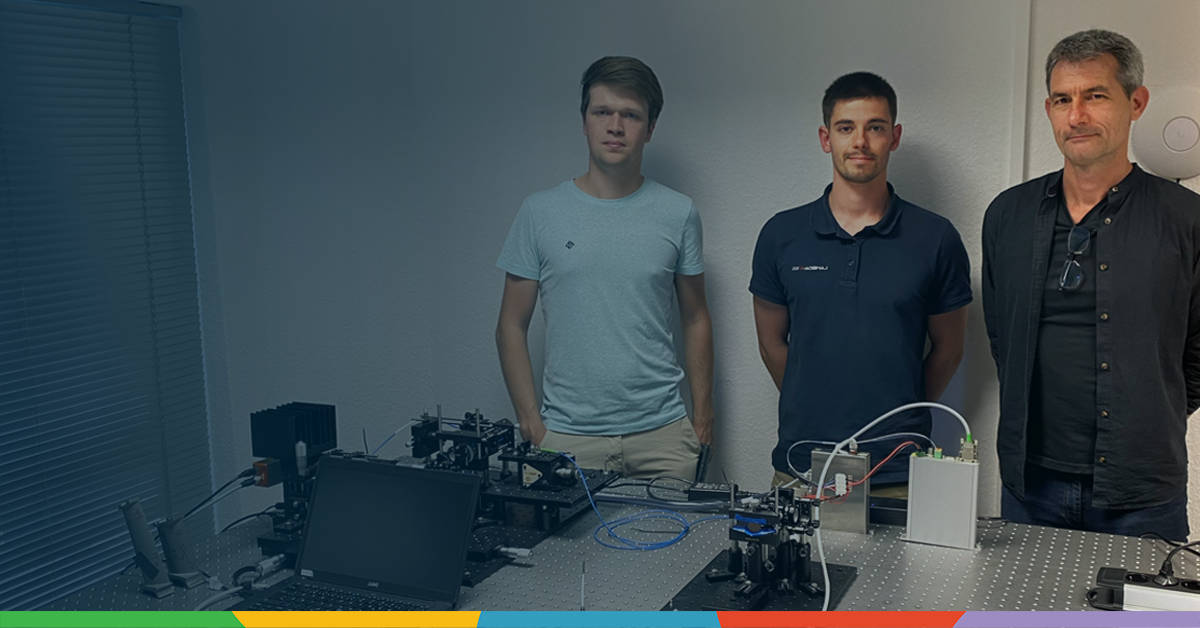
The power of 3D inspection, from aerospace to MedTech
Reliable 3D inspection has a direct impact across sectors:
- In aerospace and energy, to detect micro-defects before they compromise safety
- In automotive and manufacturing, to validate precision parts quickly and non-destructively
- In MedTech applications, where minimally invasive imaging is key.
These tools reduce downtime, improve reliability in confined environments and cut costs by avoiding unnecessary interventions. They bring laboratory-grade optical precision to field-ready inspection applications. Such optical technology has the potential to redefine quality control and diagnostics.
Turning interferometry into a compact, reliable tool
Pushing the limits of optical innovation, the Lambda-X Verhaert High-Tech team and IT Concepts developed a compact interferometric 3D borescope, overcoming several technical barriers in the process:
- Avoiding mechanical movement inside the probe, while still enabling the optical path difference scans of the temporal domain OCT.
- Maintaining light injection stability in fiber-based setups.
- Transmitting coherent information through flexible fiber bundles to a camera.
- Miniaturizing all components’ design to fit into an 8 mm probe head without losing performance.
The result is a proof-of-concept 3D borescope that demonstrates how interferometry can be adapted for compact and flexible use. For life sciences, this could mean:
- Optical Coherence Tomography (OCT) imaging for high-resolution depth scans.
- An optical design for polarization control to preserve signal quality.
- A 3D camera integrating pixel-level demodulation (Heliotis heliSens™) for real-time interferometric imaging.
- A double interferometer setup to keep the scanning mechanism outside the probe head.
- Fiber-bundle validation transport of the sample interference image.
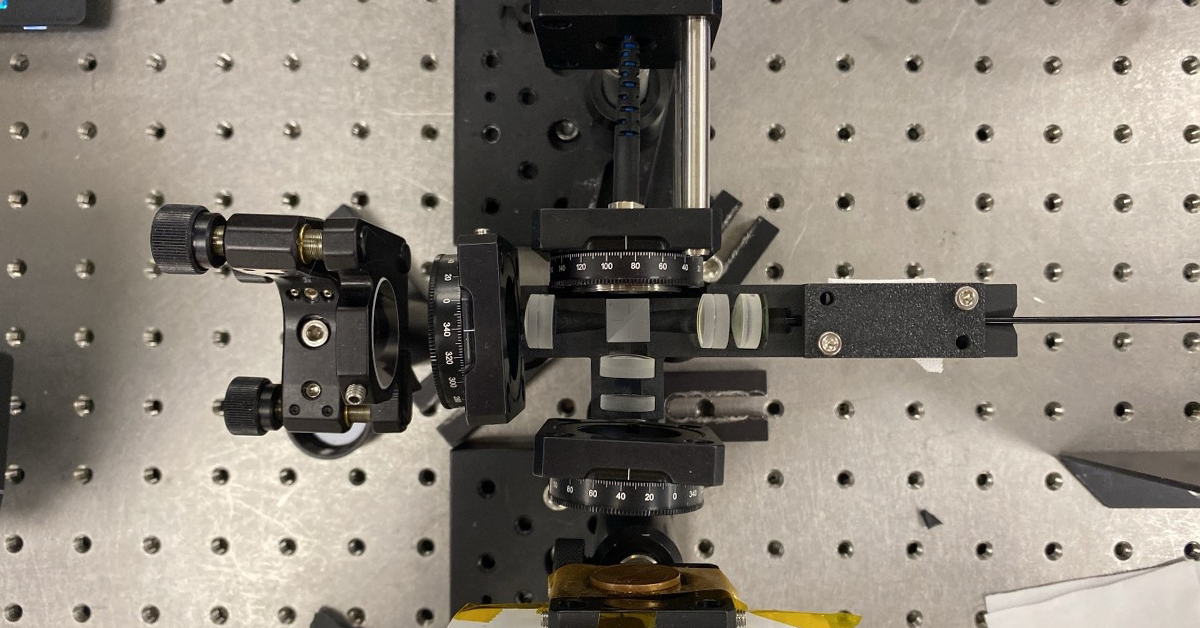
Step by step, each subsystem was tested and validated under rigorous frameworks – ISO9001 and EN9100 – before integration into a working demonstrator.
From optical expertise to industrial impact
Turning these concepts into reality takes more than clever design. It requires a blend of deep optical and interferometry expertise, precision engineering for system integration and structured R&D. By combining interferometry know-how with industrial-grade processes, we co-develop tailor-made optical systems that translate advanced methods like OCT into robust, field-ready tools the industry can rely on.
The result is a major step toward next-generation 3D borescopes: compact, flexible and precise. By systematically solving the challenges of interferometric imaging in tight geometries, we’re paving the way for practical tools that can transform industrial inspection.
High-tech optical innovation is redefining what’s possible for industry. Curious to know more about 3D precision in deployable systems? Let’s discuss your optical challenges!