

Many of today’s most promising biotechnologies fail at the intersection of biology and measurement, not at the concept stage. As microfluidic platforms, from droplet screening to organ-on-a-chip, become the industry standard, the ability to extract high-fidelity data is the new ceiling for success.
Biology that outgrows standard instrumentation
Measurement is now the main constraint of biotechnology, rather than biological complexity. Today’s investigations require an unparalleled level of accuracy, speed, and reproducibility, from single-cell analysis to high-throughput screening.
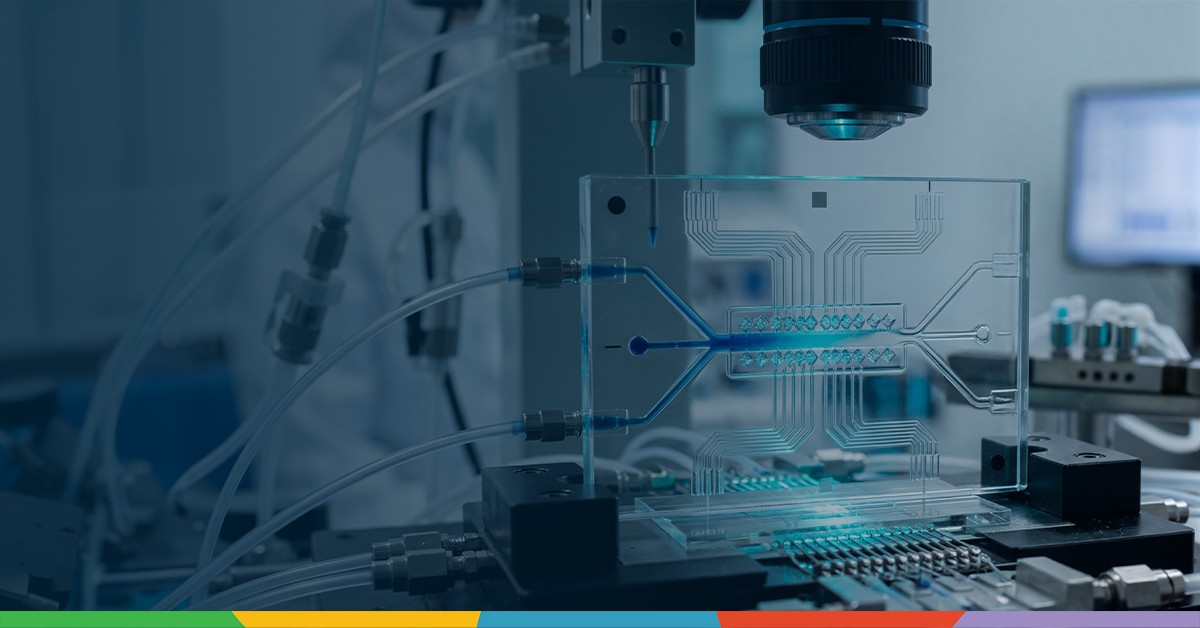
Nowhere is this more visible than in microfluidics. By manipulating fluids at the micrometer scale, these systems enable highly controlled experiments on cells, droplets, and particles. For example, droplet microfluidics supports applications such as single-cell analysis, drug delivery, and screening assays by converting individual drops into millions of parallel microreactors.
Beyond droplets, microfluidics is the foundation of new biological models such as organoid cultures and organ-on-a-chip platforms, where cellular behavior is investigated in settings more akin to living systems.
However, one limitation applies to all of these applications: optical detection and imaging are essential for extracting trustworthy, high-quality data. And this is the point at which conventional instrumentation starts to fail.
Precision data is the true bottleneck
In microfluidic systems, biological signals are often faint, fast, and confined to extremely small volumes. Detecting them requires more than generic imaging or sensing tools – it requires optical systems designed for the specific physics of the experiment.
Consider droplet screening workflows. A single run may require the analysis of thousands to millions of droplets per hour, each acting as an individual microreactor containing cells or biochemical reactions. Capturing meaningful data in these conditions requires optical systems that combine:
- High-speed detection compatible with high-throughput droplet flows
- High sensitivity to resolve weak fluorescence signals at low concentrations
- Stable optical alignment to ensure measurement reproducibility over time
- Robust signal-to-noise ratio acquisition despite variations in flow, position, and optical interfaces
Fluorescence-based assays add even more complexity. Monitoring gene expression, stress responses, or phenotypic changes requires isolating weak optical signals from background noise, often within confined geometries and at high acquisition speeds.
In these conditions, maintaining an optimal signal-to-noise ratio becomes critical, as even minor optical distortions or misalignments can lead to data loss or misinterpretation.
The hidden complexity of microfluidic environments
Microfluidic platforms introduce optical challenges that are often underestimated. Materials such as PDMS, glass, and polymers subtly yet significantly affect light propagation. Channel geometries introduce refraction and scattering effects. Interfaces between materials produce additional distortions.
Simultaneously, there is a growing pressure to move beyond bulky laboratory setups. Optical systems must coexist with fluidics, electronics, and software in constrained environments as biotech devices become more automated, integrated, and compact.
This convergence creates a multi-dimensional challenge: optimizing optical performance while ensuring system-level robustness and scalability.
These effects directly degrade optical performance by reducing resolution, lowering signal intensity, and altering the signal-to-noise ratio, making standard optical configurations insufficient.
From experimental setups to usable systems
Many biotechnology innovations originate in tightly regulated academic environments. However, it is far from simple to convert these configurations into dependable, repeatable instruments.
Optical systems must transition from flexible, manually aligned configurations to stable, manufacturable architectures. This entails reconsidering everything from alignment techniques and environmental stability to optical pathways and component selection.
Integration is equally important. Optical subsystems must function seamlessly within the broader instrument, interacting with fluid-handling, detection electronics, and data-processing pipelines.
This transition requires controlling parameters such as optical alignment stability, signal consistency, and system sensitivity within real operating conditions.
Enabling the next wave of discovery
The future of biotechnology will not be driven by biology alone, but by the precision of the tools used to observe it.
Tailor-made optical systems are increasingly becoming a key enabler in this shift. By aligning optical design with the specific constraints of biological applications, they allow researchers to capture subtle signals, improve data reliability, and scale experimental approaches beyond the lab.
Is your optical pathway holding back your biological breakthrough? Let’s solve the bottleneck together.