

Logistics may sound simple, moving goods from A to B, but in reality, it’s a high-stakes balancing act. Wasteful packaging, fragile supply chains, thin margins and outdated systems make efficiency and sustainability a constant challenge. Yet, these very pressures are driving innovation. From smart, reusable boxes to data-driven platforms, the industry is quietly transforming, proving that the future of logistics can be both greener and smarter, with opportunities that go far beyond today’s hurdles.
Why getting from A to B isn’t simple
The promise of a more sustainable and data-driven logistics sector sounds great on paper, but the day-to-day reality tells a different story. So before diving into what the future could look like, it’s worth taking a closer look at the state of today’s supply chains.
For starters, logistics still relies heavily on single-use carton boxes. They get the job done, sure—but create a lot of waste, especially now that CO₂ regulations are tightening, the pressure for sustainable alternatives is mounting. Then there’s the question of security and transparency. Packages can be opened, tampered with or mishandled, and there’s often no way to know until it’s too late. Data doesn’t help much either: it’s usually collected at a high level (think entire trucks, not individual shipments) and only analyzed afterward. Useful? Sometimes. Timely? Not really.
Meanwhile, investing in new solutions isn’t easy. Many logistics companies are operating on thin margins while dealing with legacy systems, complex tech, and teams who may not be thrilled about changing how they work.
But here’s the interesting part: these challenges might actually be pointing the way forward.
Sustainable, secure and smart
Here’s where things start to look up. A smart, durable and reusable logistics industry is closer than you think, with concrete opportunities already within reach:
- Reusable, sustainable boxes: Durable, fully recyclable plastic designed for hundreds or even thousands of rotations, cutting down on wasteful, single-use packaging.
- Real-time monitoring: Sensors track location, temperature and handling from anywhere, giving teams instant visibility into every shipment.
- Swappable connection modules: If a module fails, it can be replaced without scrapping the entire box, keeping operations running smoothly.
- Smart locks: Access is only granted after authentication, protecting goods from tampering.
- Digital platform analytics: Data from every box feeds into a central platform, enabling anomaly detection, automated rerouting and insights to optimize the supply chain.
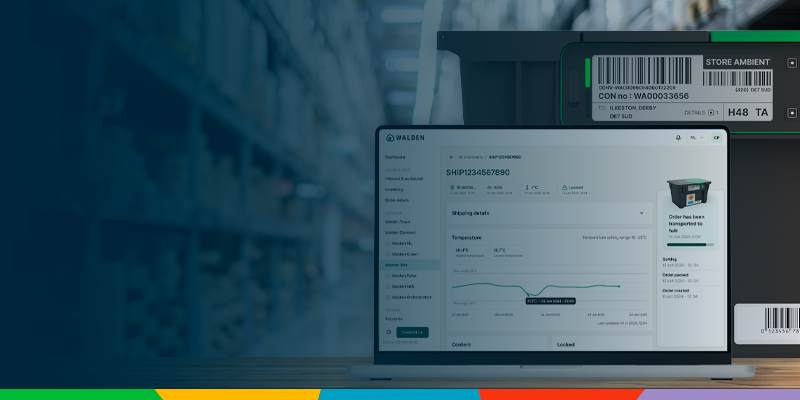
Walden illustrated how these opportunities play out in practice by creating a system that delivers high-value goods transparently and sustainably. Each shipment is fully trackable, monitored with temperature sensors and cameras, and secured with smart authentication locks. Beyond protecting goods, the system generates metrics that help optimize future operations, proving that sustainable, data-driven logistics is already happening.
From smart boxes to smarter business
The opportunities we’ve seen so far are just the beginning. The future of logistics promises to be even more sustainable and data-driven, opening doors to new business models and revenue streams.
Resource depletion and tightening environmental regulations will push companies to reduce their ecological footprint, making reusable, sensor-equipped boxes more than just a ‘nice-to-have’. As adoption grows, hardware and data costs will drop, allowing these solutions to expand beyond high-value shipments into low-margin, everyday logistics. In fact, innovations in high-value segments, like smart labels and secure tracking, often pave the way for broader industry adoption.
This evolution also brings fresh financial models. Instead of buying boxes outright, companies could pay for the service: transportation plus the smart box. This ‘hardware as a service’ approach shifts responsibility from the customer to the provider, removes upfront investment barriers and keeps balance sheets light and flexible. Sensors not only track shipments, but also enable predictive maintenance, over-the-air updates and digital twin simulations, giving full control over fleets and operations.
Finally, as more stakeholders join the network, anonymized data itself becomes a service. Governments can share planned roadworks for automatic rerouting or use traffic insights for circulation planning. In other words, the logistics of tomorrow aren’t just sustainable, they’re smart, connected and full of untapped business potential.