

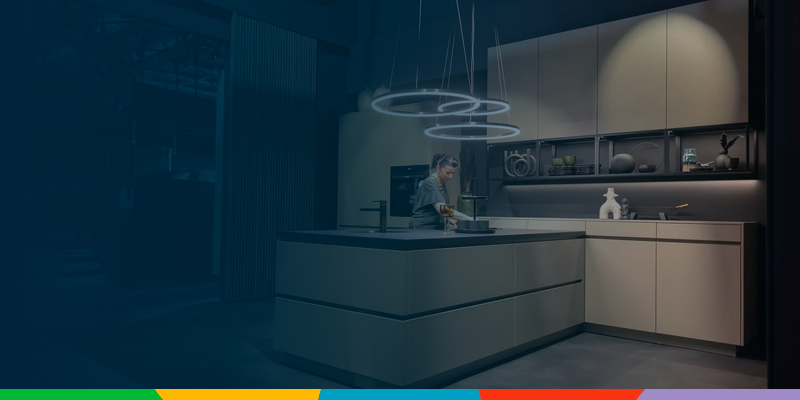
 Kitchens are increasingly being designed as an extension of the living space, requiring appliances to balance performance, acoustics, material coherence, and architectural integration. This evolution reflects a shift in consumer expectations around how technology should blend inside the home: present when needed, invisible when not. At EuroCucina 2026, this ‘silent revolution’ became one of the clearest indicators of where kitchen innovation is heading.
The psychology of matte and the material challenge
While ‘black to black’ remained a visible aesthetic trend throughout the exhibition, the deeper story was less about color and more about integration. The real innovation lies in how intelligence and connectivity are being embedded into products without disrupting the visual calm of the space.
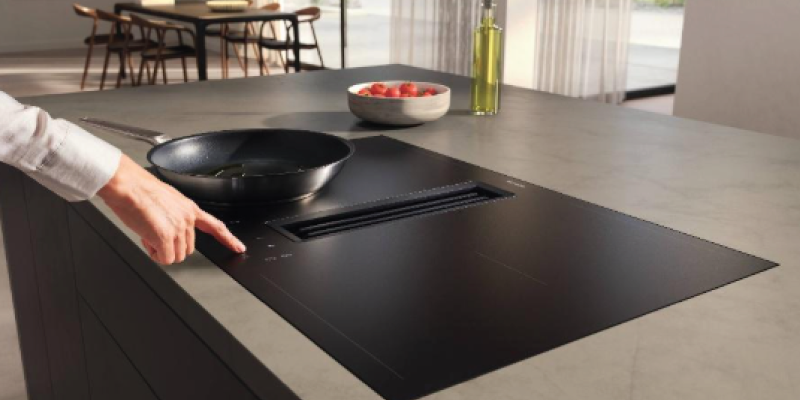
Matte finishes, tactile materials, and muted surfaces are increasingly being paired with hidden sensors, connected ecosystems, and adaptive functionality. This reflects a broader movement away from technology as a visual statement and toward technology as an enabler of experience.
For product developers and manufacturers, this creates new engineering challenges. As products become visually quieter, expectations for material quality, precision, durability, and user interaction rise significantly. Minimalism leaves little room for imperfection.
The haptic rebellion: Why we need the click
One of the more notable product directions visible at EuroCucina was the renewed focus on tactile interaction. After years of fully digital touch interfaces, manufacturers are rediscovering the value of physical feedback in creating intuitive and trustworthy user experiences.
A clear example was seen in the latest cooktop interfaces featuring haptic-feedback controls. Rather than relying exclusively on flat touchscreens, brands are reintroducing physical interaction points that offer resistance, precision and sensory confirmation.
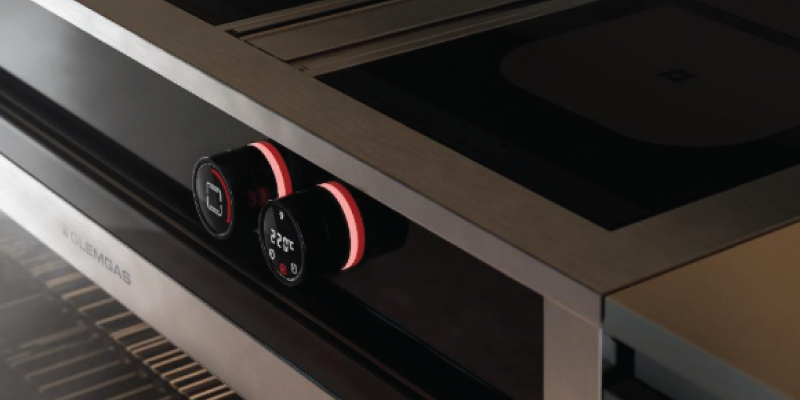
From an innovation perspective, this introduces a significant mechatronic challenge. The next generation of premium products must combine the emotional familiarity of mechanical controls with the intelligence and flexibility of digital systems. The complexity lies not only in adding connectivity but also in creating advanced technology that feels natural and unobtrusive.
The performance paradox: Professional power in silent spaces
Another major trend emerging from EuroCucina 2026 is the rise of what could be called ‘professional domesticity.’ Consumers increasingly expect professional-grade cooking performance within kitchens that visually resemble refined living spaces.
This creates a major engineering paradox: how can high-performance appliances generate heat, airflow and extraction capacity without compromising acoustic comfort, spatial openness, or interior aesthetics? Systems are becoming increasingly dematerialized, with extraction integrated into lighting elements, cooktops, or architectural structures rather than traditional overhead hoods.
However, achieving invisible performance is technically complex. As appliance boundaries become more integrated into the living environment, manufacturers need to address airflow, thermal management, moisture control, and acoustics at the room level. This demands advanced simulation and multidisciplinary collaboration across engineering, industrial design and user experience.
Designing for longevity and modularity
Beyond aesthetics and interaction, longevity emerged as another important innovation challenge throughout the event. With technological evolution, markets are facing growing pressure to create products that remain relevant over longer product lifecycles.
The industry is gradually moving towards kitchens with timeless architectural exteriors combined with upgradable technological interiors. This means that modularity, serviceability, software adaptability and ecosystem compatibility are critical for product development.
The technology future is felt, not seen
The strongest takeaway from EuroCucina 2026 is that the industry is moving beyond technology as spectacle. The focus is moving toward technology that integrates so seamlessly into the home environment that it becomes almost invisible to the user experience.
This evolution demands multidisciplinary innovation that combines engineering, material science, acoustics, interaction design and human behavior into a single cohesive experience.